Association of Korean-Canadian
Scientists and Engineers at the
University of Toronto
Association of
Korean-Canadian
Scientists and
Engineers at the
University of Toronto
The Association of Korean-Canadian Scientists and Engineers at the University of Toronto is a non-profit professional organization to support sharing scientific knowledge between Korean-Canadians and setting up connections between Korea and Canada for further development.
Learn More


Featured this month
Alzheimer’s Disease: The New Endemic?
Alzheimer’s disease (AD) is often described as the defining neurodegenerative challenge of the 21st century. As it progresses through the brain, it erodes memories, identity, and independence. As the leading cause of dementia, a condition in which people struggle with memory, AD currently affects 55 million people globally, a number that by 2030 will grow to 78 million.[1-3] With the growing population, the disease is increasingly becoming a concern. In individuals over the age of 65, in the US, 1 in 9 older adults live with AD, with 1200 new cases per 100,000 people emerging continually.[1-5] The main symptoms of AD include memory loss, confusion, wandering and mood changes, and these symptoms are due to neuronal damage in brain parts that are responsible for memory, language and thinking. The disease is characterized by the accumulation of two abnormal protein structures in the brain: beta-amyloid plaques and tau neurofibrillary tangles. These protein deposits disrupt normal communication between brain cells and trigger cell death, ultimately leading to widespread brain tissue loss over time.[5,6] This process fundamentally alters how the brain functions and processes information. Alzheimer's typically progresses through predictable stages. Early symptoms include memory loss for recent events, difficulty finding words, and problems with reasoning and judgment. Then, this preclinical AD state progresses to mild cognitive impairment (MCI) and includes symptoms such as short-term memory confusion, behavioural changes, language difficulties, and problems with spatial awareness.[1-3.7] In later severe stages, people require assistance with basic daily activities, including eating, walking, and personal care. While the rise of AD may seem daunting, recent advances in AD research have transformed how the disease is diagnosed and how they are treated. Modern diagnostic strategies now heavily emphasize early, pre-symptomatic detection rather than after each patient reflects symptoms. There is an increasing consensus that AD pathology begins 10 to 20 years before symptoms of memory loss.[1,2] Using a combination of β-amyloid plaque and τ-protein positron emission tomography (PET) scanning and cerebrospinal fluid (CSF) biomarkers, clinicians have been able to identify pathological changes in the central nervous system.[2] In parallel, blood samples with free phosphorylated τ-protein show high promise in becoming a minimally invasive and cheaper biomarker for AD[2]. 1. Abdul Manap AS, Almadodi R, Sultana S, Sebastian MG, Kavani KS, Lyenouq VE, Shankar A. Alzheimer’s disease: A review on the current trends of the effective diagnosis and therapeutics. Frontiers in Aging Neuroscience. 2024;16. doi:10.3389/fnagi.2024.1429211 2. Khan S, Barve KH, Kumar MS. 2020. Recent advancements in pathogenesis, diagnostics and treatment of Alzheimer’s disease. Current Neuropharmacology. 18(10):1106–1125. doi:10.2174/1570159X18666200603102933. PMID: 32484110; PMCID: PMC7709159. 3. Zhang J, Zhang Y, Wang J, Xia Y, Zhang J, Chen L. Recent advances in alzheimer’s disease: Mechanisms, clinical trials and New Drug Development Strategies. Signal Transduction and Targeted Therapy. 2024;9(1). doi:10.1038/s41392-024-01911-3 4. Alzheimer’s Association. 2024. 2024 Alzheimer’s disease facts and figures. Alzheimer’s & Dementia. 20(5):3708–3821. doi:10.1002/alz.13809. PMID: 38689398; PMCID: PMC11095490.) 5. Breijyeh Z, Karaman R. 2020. Comprehensive review on Alzheimer’s disease: causes and treatment. Molecules. 25(24):5789. doi:10.3390/molecules25245789. PMID: 33302541; PMCID: PMC7764106. 6. Porsteinsson AP, Isaacson RS, Knox S, Sabbagh MN, Rubino I. 2021. Diagnosis of early Alzheimer’s disease: clinical practice in 2021. Journal of Prevention of Alzheimer’s Disease. 8(3):371–386. doi:10.14283/jpad.2021.23. PMID: 34101796; PMCID: PMC12280795. 7. Yu J-T, Xu W, Tan C-C, Andrieu S, Suckling J, Evangelou E, Pan A, Zhang C, Jia J, Feng L, et al. Evidence-based prevention of alzheimer’s disease: Systematic review and meta-analysis of 243 observational prospective studies and 153 randomised controlled trials. Journal of Neurology, Neurosurgery & Psychiatry. 2020;91(11):1201–1209. doi:10.1136/jnnp-2019-321913
Learn More

Upcoming Events
Sponsor
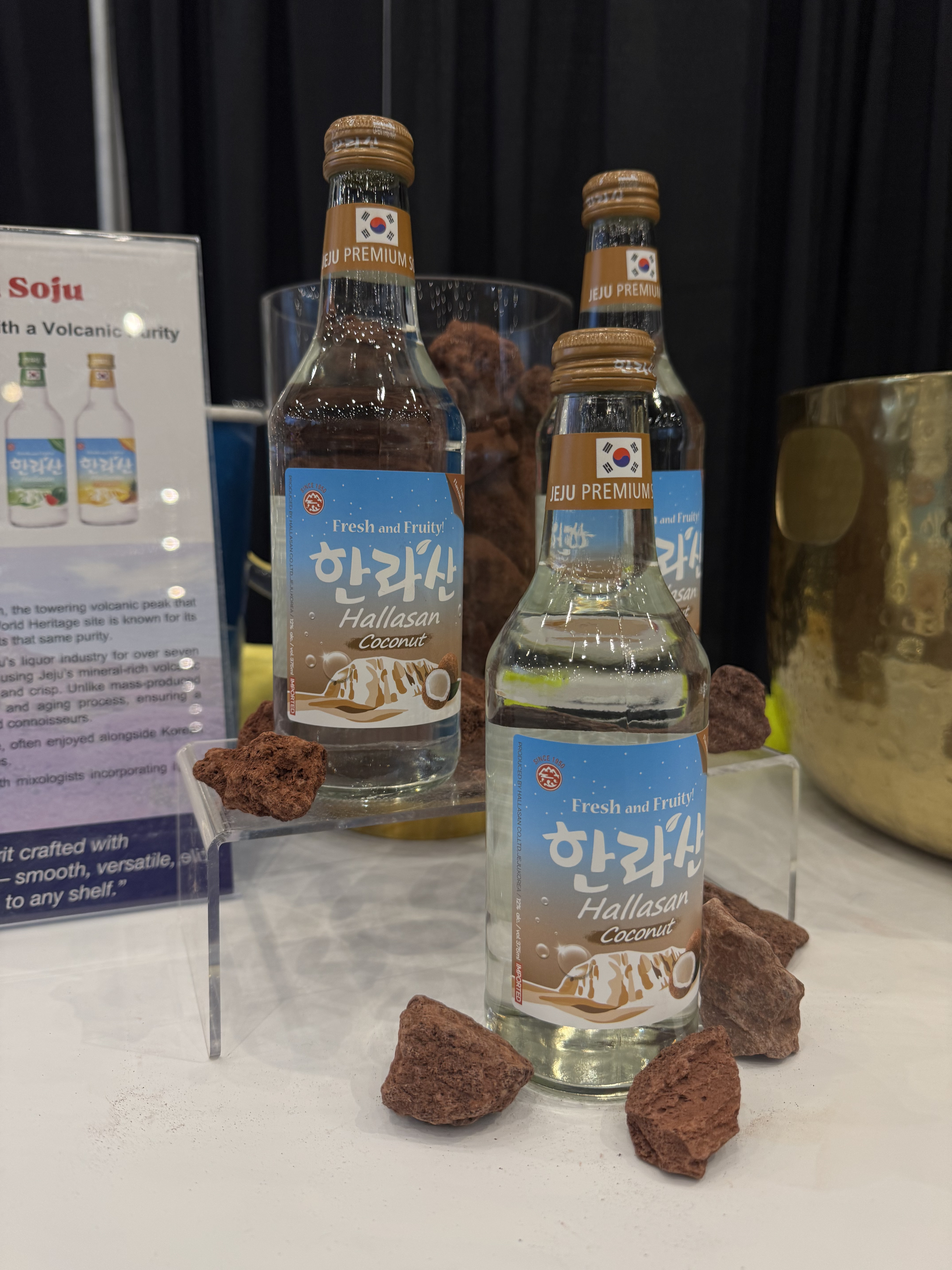
Hallasan

Hallasan is a premium soju from Jeju Island, South Korea, made using naturally alkaline, volcanic rock-filtered water, which gives it a clean and crisp taste. The original version is known for a higher alcohol content 21% and smooth profile, while flavored varieties, such as Mandarin and Lychee, are made with natural fruit juice for a balanced sweetness. It's often served cold and is versatile for sipping or mixing in cocktails.
Explore